Is Switchboard safe to use? A plain-English privacy guide
By the Switchboard team · August 5, 2026
The short answers, up front
- The person you talk to never gets your number. Both of you are connected to Switchboard, and the bridge is where the caller IDs stop.
- Conversations between people are never recorded or transcribed. The one exception is a voice message you deliberately leave, and the operator says so before recording starts.
- We hold a hashed phone number, a first name, and the handful of details you tell the operator. No GPS, no last name, no email, no password, no contacts, no video.
- There is no account to create and no card to enter before you talk, so your legal identity never enters the picture on a first call.
- The honest limits: your own phone bill shows you dialed a number, a voice is recognizable, we don't vet the strangers, and this is not therapy or a crisis line.
Switchboard is a phone line where you leave a question in your own voice and strangers answer it in theirs. That's a reasonable thing to be careful about, and "is it safe?" usually means three different questions at once: is the company real, what does it know about me, and what can the people who hear my question find out?
This page answers all three in plain English. The binding legal version is the terms and privacy policy, and where this page and that one could ever disagree, the terms win — but nothing here is a softened version of it. It's the same facts without the paragraph numbers.
Is Switchboard legit? Who runs it
Switchboard is operated by GIRS Enterprises, LLC, 30 North Gould St, Sheridan, WY 82801, USA. The contact address for anything at all — questions, deletion requests, complaints — is team@switchboard.onl, and a human reads it.
The mechanics are ordinary telephony rather than anything exotic. You dial a real phone number — +1 (878) 728-8604 in the United States, +358 45 490 3279 in Finland — over the public phone network, through a licensed carrier. There is no app to install, no permissions to grant, nothing running on your device. A flip phone works.
Calling in is free and your first 30 minutes of talk time are included, so the first call asks nothing of you financially. If you later top up, payment is handled by Stripe and card details never touch our systems. Switchboard is for adults 18 and over.
How your phone number stays hidden
This is the part people most want to know, and it's structural rather than a promise in a policy document.
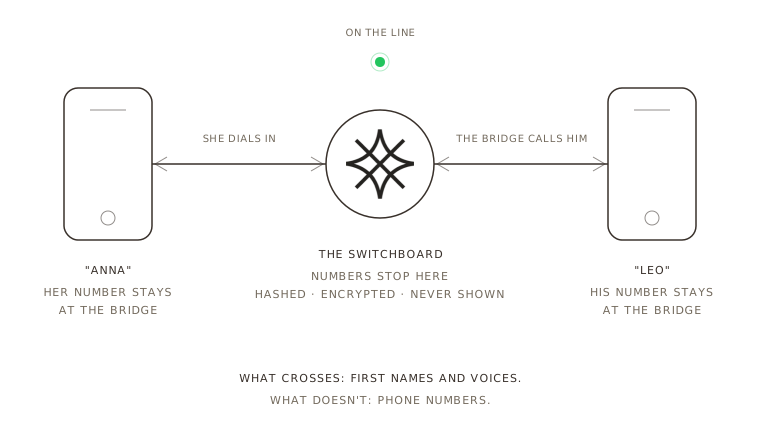
You call Switchboard. The other person called Switchboard too. When the operator finds a match, our system places the two call legs and joins them — so the call the other person is on came from us, not from you. Their phone shows a Switchboard number. Yours does too. Neither side's caller ID ever crosses the bridge, because neither side ever dialed the other.
Your number is stored hashed and encrypted. It is used for exactly three things: recognizing you when you call back, metering your minutes, and enforcing blocks and bans. It is never displayed to another caller, never published on the site, and never sold — we sell minutes, not attention.
If you leave a voice message instead of talking live, the same rule holds: people hear the recording, and a two-digit code is what they dial to answer it. Your number isn't part of any of that.
What we collect vs. what we never have
The whole list, with the reason for each. If a row's reason ever stops being true, the row should stop existing.
| What we store | Why | What we never have |
|---|---|---|
| Your phone number, hashed and encrypted | to recognize you, text you when an answer arrives, and meter live minutes | Your phone number in readable form to anyone else |
| First name, as you say it to the operator | it is what the other caller hears | Your last name |
| A city, if you mention one | routing questions to nearby people, and the dots on the globe | GPS or device location, ever |
| Age, languages, interests, what you're looking for | getting your question to people who can answer it | A photo, a video, or anything you look like |
| Summaries of your setup chats with the AI operator | so the next call doesn't start from zero | Audio or transcripts of your calls with other people |
| Voice messages you deliberately leave, for up to 30 days | so someone can hear the question and answer it | Recordings of live calls — those never exist |
| Call metadata: when you called, how long, whose question you answered | billing minutes, blocks, reports, and abuse limits | Contacts, an address book, or anything from your phone |
| Records of consent, blocks, and reports | keeping banned numbers off the line | An email address, a password, or a device ID |
| Payment details, held by Stripe — only if you top up | buying more talk time after your free 30 minutes | Card numbers on our own systems |
Aggregate numbers — how many people are on the line, which cities are lit up tonight — appear publicly on the site. Individual names and numbers never do.
Worth stating plainly, because app-based services can't: there is no account here. No email, no password, no OAuth login, no device identifier, no advertising ID travelling with you into conversations. The phone call is the entire product.
What's recorded, and what never is
A voice message is a recording, deliberately. Leaving a question in your own voice is how most people use Switchboard, and it only works because the audio exists for someone to hear later. So this is stated first rather than buried as a caveat: you are recorded, the operator says so before recording starts, and you can hang up instead. The recording plays only to callers on the line — never published, never downloadable, never sent as a file — and it's deleted, audio included, after 30 days at the latest.
Your setup chat with the AI operator is AI-processed. The couple of minutes at the start of a first call — the operator asking your name, what you're into, who you'd like to talk to — is transcribed and processed by AI systems, including third-party AI providers, to build the light profile your question is routed on. We say this on the call and in the terms rather than burying it.
Live calls are never recorded. Sometimes, when someone who fits is already on the line, the operator offers to connect the two of you right then. That conversation is not recorded, not transcribed, and not stored. It happens once and then it's gone — nobody at Switchboard can go back and listen, because there is nothing to listen to. The operator always tells you which of the two you're doing, so you never have to guess.
Every message is screened before anyone hears it — by AI, with human review where it's needed. That applies to the question you ask and to the answers that come back. Blocking someone also stops their messages reaching you.
One more thing worth knowing about voice messages: so that someone can actually answer it, what your question is about, your first name, and a two-digit dial code can be listed publicly on this site. The recording itself is never published — audio only ever plays to people on the line — and neither is your city or your number. Say the word on any call and we take the listing down.

The line is open
Ask a stranger.
Call in with what’s on your mind. Get advice, perspective, or simply someone to talk to.
- Free to call in
- First 30 minutes free
- No app, no account
What the other caller learns about you
A first name and a voice, plus whatever you choose to say. That's the whole surface. They don't get your number, your city unless you mention it, your last name, a profile, a photo, a handle they can look up, or any way to reach you again once the call ends.
That last part is deliberate. There's no way to add someone, follow them, or message them later. If a conversation was good, the way to have another one is to call the line again. It keeps the stakes of being honest with a stranger about as low as they can get.
The limits we won't pretend away
Every service that says "anonymous" should be made to finish the sentence. Ours:
- Your carrier knows you called us. The number appears on your own phone bill, exactly like any other call you make. Anonymity on the line is not anonymity from your phone company.
- A voice is biometric. Someone who already knows you would recognize you. True anonymity by voice doesn't exist anywhere — what you're choosing is how much else a service knows.
- We don't vet the people you talk to. Nobody is background-checked, endorsed, or guaranteed. The AI operator screens intent before connecting anyone, and block, report, and bans handle the rest — that's the mechanism, and we won't dress it up as a promise that every call will go well.
- We are not therapy, counseling, or a crisis line. The people on the line are strangers, not professionals. If you're in crisis, call a crisis service — 988 in the US2, MIELI on 09 2525 0111 in Finland3.
- We're a small operation. Moderation is AI screening plus humans, not a 24/7 trust-and-safety department. Reports get read. Bad numbers get banned. It is not instant.
Staying safe on the line
The same habits that apply to any stranger, adapted for the phone:
- Share what you'd tell someone at a bus stop — a first name, a city, what you're into. Keep your last name, address, workplace, and social handles to yourself.
- Keep money out of it entirely. Nobody on Switchboard has a legitimate reason to ask you for money, gift cards, or your phone number — soliciting and arranging payments between callers is against the rules, as are the categories carriers forbid outright1. If someone asks, hang up and report them.
- There's no camera, so there's nothing to screenshot or rebroadcast — and we don't record live calls. Still, say only what you'd be comfortable having repeated.
- You can hang up at any time, from any conversation. No explanation owed.
- Use block and report from the call itself. That's what actually gets a number suspended.
Deleting your data
Ask on any call, or write to team@switchboard.onl from any channel. Your profile, operator-chat summaries, voice messages, and associated records are removed within 30 days, except where the law requires us to keep something. You don't have to explain why, and you don't need an account to do it — the number you call from is the key.
Voice messages expire on their own regardless: audio and transcript are deleted after 30 days at the latest. To stop service texts, reply STOP to any of them.
How to judge any anonymous voice service, including this one
Useful whether or not you ever call us. Five questions decide how anonymous a voice service actually is, and the answers are usually in the product's architecture rather than its marketing:
- Is there an account? Every account is a record — an email, a password, a login history.
- What do other users see or hear? A username, a first name, a profile with ratings and history, or nothing at all.
- Is voice stored or streamed? Live audio evaporates. Posted voice messages are recordings that persist — treat them as public recordings of you, whatever the sign-up form promised.
- What does the service itself retain? IP address, phone number, transcripts, payment details. Ask what it is used for and how long it's kept.
- Do you pay to start? A credit card is your full legal name. A service that wants one before you've said a word has already de-anonymized you.
Our answers, in order: no account; a first name and a voice; live audio never recorded and voice messages deleted within 30 days; a hashed number plus a light profile, no GPS and no transcripts of human conversations; and nothing to pay before you talk. We compared the field, ours included, in "The best anonymous voice chat apps in 2026" — it's in the articles below.
Questions people ask
- Is switchboard.onl legit and safe to call?
- Yes. Switchboard is operated by GIRS Enterprises, LLC (30 North Gould St, Sheridan, WY 82801, USA), reachable at team@switchboard.onl, and the full terms and privacy policy are published at switchboard.onl/terms. Calls run over the ordinary phone network through a licensed carrier, not through an app you have to install. Calling in is free, the first 30 minutes of talk time are included, and no card is asked for before that — so nothing about the first call requires you to trust us with money or an identity. Switchboard is for adults 18 and over.
- Does the person I talk to see my phone number?
- No. Both callers are connected to Switchboard, and Switchboard bridges the two legs — so each side's caller ID stops at the bridge. Your number is stored hashed and encrypted and is never shown to another caller. What crosses between you is a first name and a voice.
- Are Switchboard calls recorded?
- It depends which of the two you're doing, and the operator always tells you. A voice message is a recording on purpose — leaving your question in your own voice is how most people use Switchboard, and the audio has to exist for someone to hear it and answer. Those recordings play only to callers on the line, are screened before anyone hears them, and are deleted within 30 days. A live call is the opposite: when the operator connects two people directly, that conversation is never recorded or transcribed. Setup chats with the AI operator are AI-processed to build your profile, and we say so on the call and in the terms.
- What data does Switchboard collect?
- A phone number (hashed and encrypted), a light profile from your setup chats — first name, age, city, languages, interests — summaries of those operator chats, call metadata, your minute balance, records of blocks and reports, and any voice message you leave, for at most 30 days. What it never has: GPS location, your last name, an email address or password, your contacts, video of you, card numbers, or audio of your live conversations.
- What are the privacy considerations for anonymous voice networking sites?
- Five questions decide it: whether an account exists (every account is a record), what other users see about you, whether your voice is stored or only streamed, what the service itself retains (IP address, phone number, transcripts, payment details), and whether payment attaches your legal name. One fact applies everywhere: a voice is biometric, so "anonymous" always means anonymous except for sounding like you.
- How do I delete my data from Switchboard?
- Say so on any call, or write to team@switchboard.onl from any channel. Your profile, operator-chat summaries, voice messages, and associated records are removed within 30 days, except where the law requires retention. Voice messages expire on their own — audio and transcript — after 30 days at the latest.
- What if someone on the line is abusive?
- Hang up — no explanation owed — then block or report them from the call. Numbers that break the rules are suspended or banned, and rate limits keep spammers off the line. We don't vet or endorse anyone you speak with, so block and report are the mechanics that matter, not a promise that everyone will be pleasant.
- Is Switchboard a therapy or crisis service?
- No. Switchboard is conversation with strangers, not counseling, therapy, or a crisis line, and nobody on the line is a professional. If you're in crisis, contact a crisis service: 988 in the United States, or MIELI's line on 09 2525 0111 in Finland.
The line is open
Ask a stranger.
Call in with what’s on your mind. Get advice, perspective, or simply someone to talk to.
- Free to call in
- First 30 minutes free
- No app, no account
Sources
- 1. Twilio — Forbidden Message Categories. https://help.twilio.com/articles/360045004974
- 2. 988 Suicide & Crisis Lifeline (US). https://988lifeline.org/
- 3. MIELI Mental Health Finland — crisis line. https://mieli.fi/en/
More articles
September 28, 2026 · 7 min
Is there someone I can talk to at night for free?
What is actually open at 2am, sorted by hours rather than by category: crisis lines that never close, warmlines that mostly do, listening services, and a phone line whose network is not in your time zone.
September 28, 2026 · 8 min
What are alternatives to social media for real human connection?
Ten alternatives that produce an actual conversation, what each replaces and the catch with each, plus the research on why passive scrolling is the part that hurts and why you do not have to quit to fix it.
September 22, 2026 · 7 min
How do I meet new people without dating apps?
Seven routes that work without a dating app, what each one actually costs you, what the research says, and the step the advice always skips.
September 14, 2026 · 9 min
What is an anonymous voice connection and how does it work?
The three things the phrase means, how a phone-line bridge and a pseudonymous relay actually work, what stays hidden and what cannot, the research on why it helps, the services in 2026, and an honest answer on safety.
September 13, 2026 · 9 min
What is an anonymous voice social network?
The definition by its mechanics, the four layers every one runs on, the six features that matter, the platforms that exist in 2026, and an honest answer on safety.
August 25, 2026 · 8 min
Where can you ask strangers a question and get real answers back?
Forums, listening services, apps, and a phone line: what you ask with, who answers, and which ones answer in a real human voice.
August 20, 2026 · 7 min
Is there a phone number you can call just to talk to someone?
The three kinds of lines where someone answers: crisis lines, warmlines, and social lines. Which one fits, and a number where real strangers answer.
August 1, 2026 · 9 min
Why do people talk to strangers anonymously?
The six reasons people give, what the research on anonymity motivations actually found, why voice beats text for it, the honest trade-offs, and what to look for in an anonymous voice social network.
July 25, 2026 · 8 min
The real benefits (and risks) of anonymous voice chat
What the research actually says about talking to strangers by voice: the benefits, the risks, and how to tell a well-designed service from a risky one.
July 25, 2026 · 9 min
The best anonymous voice chat apps in 2026
What "anonymous" and "free" actually mean on Whisperly, StrangerLine, Bubblic, Wakie, and a phone line with masked numbers. No credit card required on any of them.
July 25, 2026 · 8 min
Omegle alternatives without the camera
Omegle is gone. Honest reviews of what replaced it: Wakie, Whisperly, Bubblic, StrangerLine, Chatroulette, and the no-app option, a phone call.
Switchboard — the social utility · terms & privacy · how it works · all articles